22 SEPTEMBER 2026
By Gorka Di Capitan
Every Music Video Is Made Twice
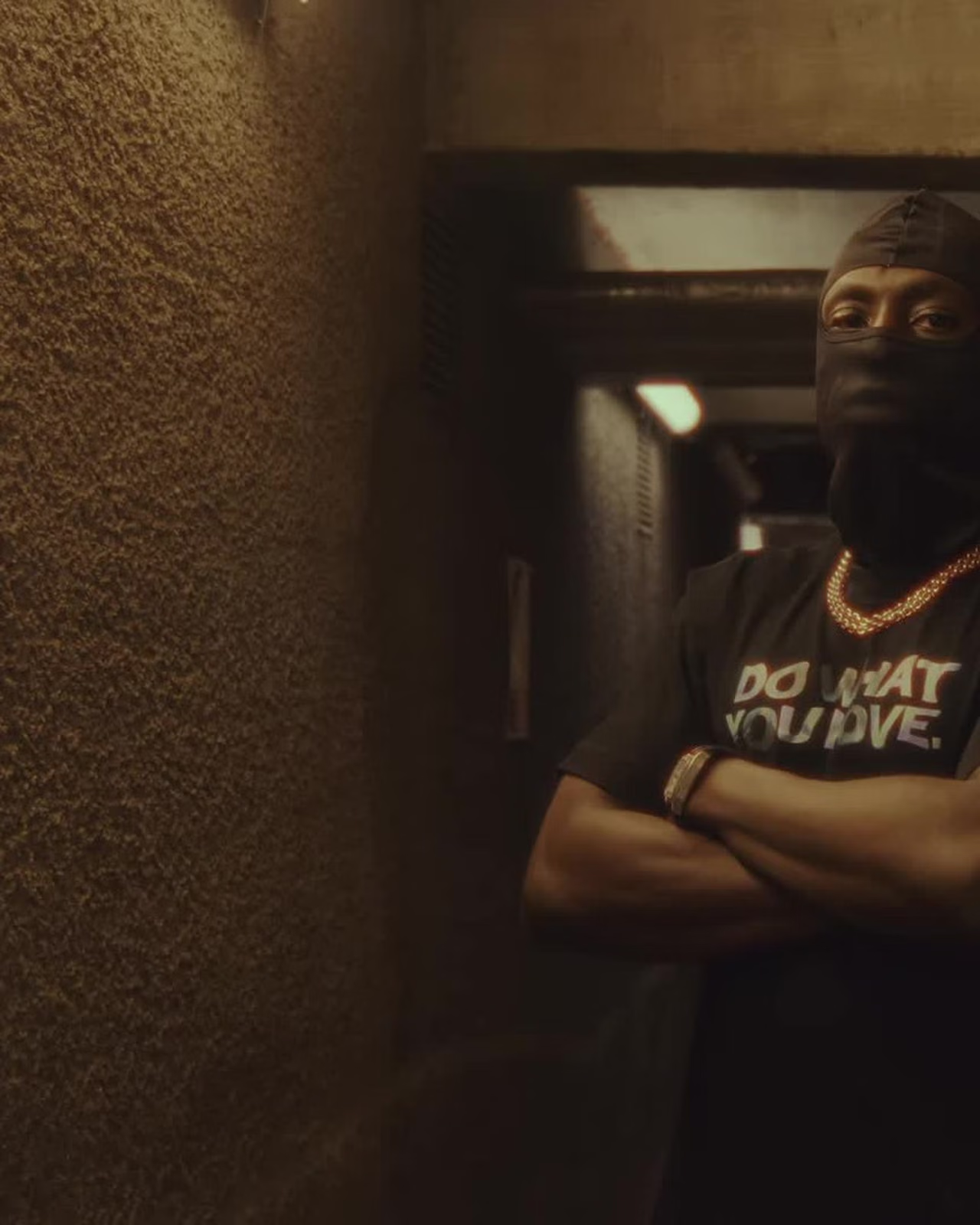
Every music video is made twice. The first time is inside the artist's head: a colour, a room, a way of moving, a version of themselves that the song has already created. Then somebody has to turn that thought into something the rest of the world can watch.
The first version costs nothing. The second one takes time, decisions, people and money.
So, how much does a music video cost in the UK? You can find someone offering one for under a thousand pounds, and you can spend five thousand, twenty thousand or a lot more. All of those prices can be honest, because they don't describe the same job.
That's why the useful question isn't 'how much is a music video'. It's 'what has to happen for this particular song to look the way it should'. Once you see what's inside that question, the prices stop being a mystery.
A three-minute video is not a three-minute job
Most artists only see the shoot day, because that's the visible part. Cameras arrive, lights go up, the track plays through a speaker for the tenth time. It feels like the video is made in those eight or ten hours.
Part of it is. But the camera only collects raw material. Before anyone presses record, somebody has to sit with the song, develop the idea, build references, choose locations, plan the lighting, decide which shots matter and organise the day so half of it isn't lost to confusion.
And after the shoot comes the part nobody sees: the footage has to be backed up, organised, synchronised, reviewed, cut, recut, graded and cleaned before anyone can call it a video. The finished piece lasts three minutes. The decisions behind it do not.
The edit can take longer than a wedding film
I film weddings, so I can say this from experience. A wedding can mean ten or twelve hours of shooting and a mountain of footage, but the day arrives with its story already built: preparation, ceremony, speeches, dinner, dancing. The structure exists before I do.
A music video gives you nothing for free. There is no natural chronology. The visual logic is invented from zero and defended cut by cut.
The artist performs the complete song several times, in different positions, outfits or locations, and every take must be synchronised to the master track. I've spent nights listening to the same chorus twenty times, choosing between two takes because the light shifted for half a second, exactly on the word that matters.
If the edit is built on performance, the mouth, the rhythm and the emotion have to stay convincing through every cut. If there's a story, it has to land while obeying the track. Then come masks, speed changes, reframing, stabilisation, transitions, skin tones under mixed lighting, effects, revisions. Duration doesn't determine difficulty. The number of deliberate decisions does.
What the price actually includes
When someone quotes you for a video, they are pricing three jobs stacked on top of each other, plus a fourth almost everyone forgets.
The first job is the idea and the preparation. It starts with what the video is for: introducing you, changing how people see you, giving a single its visual identity, building a world you can pull artwork and social content from. From that answer come treatment, moodboard, references, the choice between performance and narrative, locations to find and check, a schedule, wardrobe, props, lighting plans, crew, permissions, transport. Preparation is what gives creativity somewhere to go.
The second job is the shoot, and its cost depends on much more than the camera. A solo filmmaker in one controlled location is a different animal from a day with director, cinematographer, camera assistant, gaffer, makeup, styling, actors and production support. A quote may be carrying camera and lenses, lighting, gimbal, drone, studio or location hire, crew and cast fees, travel, accommodation, parking, props, wardrobe, set dressing, insurance, permissions and overtime. More equipment doesn't automatically make a better video. But every extra idea has a practical consequence that somebody pays in time or in resources.
Post-production is the part everyone underestimates
The third job starts when everyone else goes home. Organising and backing up the material, synchronising it, reviewing several complete performances of the same song, building the first cut, rebuilding it after feedback, correcting and grading colour, stabilising, masking, retouching, removing things that shouldn't be there, titles, effects, exports for every platform, the agreed rounds of revisions.
One apparently simple effect can mean tracking hundreds of frames. One wardrobe change adds another complete performance to synchronise. One extra location adds another visual world that has to sit convincingly inside the same three minutes.
The shoot produces footage. Post-production produces the video.
Then there's the fourth job, the forgotten one: everything that isn't the main video. The vertical teaser, the short clips, the clean version without titles, thumbnails, behind the scenes, different crops for Instagram, TikTok and YouTube Shorts. Talk about all of it before the shoot. A horizontal frame can't always become a strong vertical one, and 'a few clips for socials' can quietly grow into a second editing job if nobody defines what it means.
So how much does a music video cost in the UK?
With all of that on the table, the numbers mean something: music video production cost in the UK is three markets wearing one name.
For most independent artists, a lean but properly made performance video, one artist, one main location, a solo filmmaker or very small crew, a controlled concept and limited revisions, usually sits around £800 to £1,500.
A more developed independent production, with real pre-production, a full shoot day, multiple setups, stronger lighting, more detailed editing and crew, cast or location costs, commonly falls between £1,500 and £5,000.
Once you add a larger crew, actors, art direction, paid locations, specialist equipment or visual effects, £5,000 to £20,000 and beyond becomes perfectly possible. London locations and crew can push a budget up on their own. Travel does the same everywhere else. And check whether the quote includes VAT: some filmmakers aren't registered, larger companies usually are, and it's better to know before the invoice.
A price below these ranges isn't automatically a bad sign. It usually means something was simplified: less preparation, fewer people, a shorter shoot, a location you provide, a more basic edit, or someone charging below the real value of their time. None of that is a crime. The important thing is knowing which one it is.
What makes the price climb
The length of the song matters less than people expect. What moves the number is everything around it. Each new location costs time, transport and another setup. Actors, dancers and extras bring casting, rehearsals, wardrobe and releases. Production design is the difference between finding a wall that looks good and building a world that feels believable. Studios and permissions carry their own price. Lighting gets serious at night, in large spaces or when the camera wants to move ambitiously. Visual effects are charged by difficulty and frames, not seconds on screen. Extra final versions mean more exports, and a tight deadline means moving other work aside or adding editors.
Ambition is useful. Unplanned ambition is expensive.
How to spend less without looking cheap
A smaller budget needs a more disciplined idea, not a smaller one.
One strong location beats four weak ones. One recognisable visual rule beats a pile of unrelated effects. A carefully chosen outfit can do more for the frame than equipment the concept never needed. Build the video around one place that means something, keep the cast small, and finish the track before pre-production, because editing to a song that keeps changing is paying twice for the same work. Choose one visual idea and commit. Sort wardrobe and props early, plan the vertical content during the shoot rather than hoping it falls out of the horizontal, and agree deliverables and revisions before anyone touches a camera.
Above all, be honest about the budget from the first conversation. A good director can design around a real limit. What wastes money is pretending the limit doesn't exist until the plan has grown too large for it.
The cheapest video can end up the most expensive one
If the finished video doesn't represent you, you'll hesitate to release it, and a video that never comes out costs every penny it took to make. If it looks disconnected from the quality of the track, it quietly weakens the identity you're building. And if the production was never really planned, shooting again costs more than doing it properly once.
Two quotes rarely contain the same product. Often one includes the thinking, the preparation and the post-production that the other simply doesn't carry. Neither number is lying. They describe different amounts of work. Your job is to understand what each price is buying before you pick the smaller one.
Before you say yes to anyone, me included, have a proper conversation about the quote. Ask whether developing the concept is included, how much pre-production is planned, how many hours of filming you get, in how many locations, and who will be there on the day. Find out whether equipment, travel and locations sit inside the number or on top of it, whether editing and grading are included, how many rounds of revisions and which final versions you'll receive, because vertical cuts are often a separate line. And check whether VAT is in the price and what happens if the day runs long or the concept changes halfway.
A professional quote should survive those questions and come out clearer, not blurrier.
How much should you actually spend?
After everything I've said about how much a music video costs in the UK, my honest answer is simple: spend enough to execute one clear idea properly.
Not enough to imitate an artist with a budget fifty times bigger than yours. Not so little that it only works if everything goes perfectly, because on a shoot, something never does. Enough that when release week is over, the video still feels like yours and you're glad it carries your name.
When you sit down with a filmmaker, don't open with 'what can you give me for the lowest price'. Open with the conversation that leads somewhere: this is what the song needs to feel like, this is the release date, this is the budget I can genuinely work with. Something real can be built from that.
A clear vision tells the budget exactly where to go. Your video already exists once, in your head, and that version was free. Everything else is the cost of making the second version worthy of the first.
Thinking about a project of your own?