23 AUGUST 2026
By Gorka Di Capitan
The Dish Should Exist Before the Photograph Does
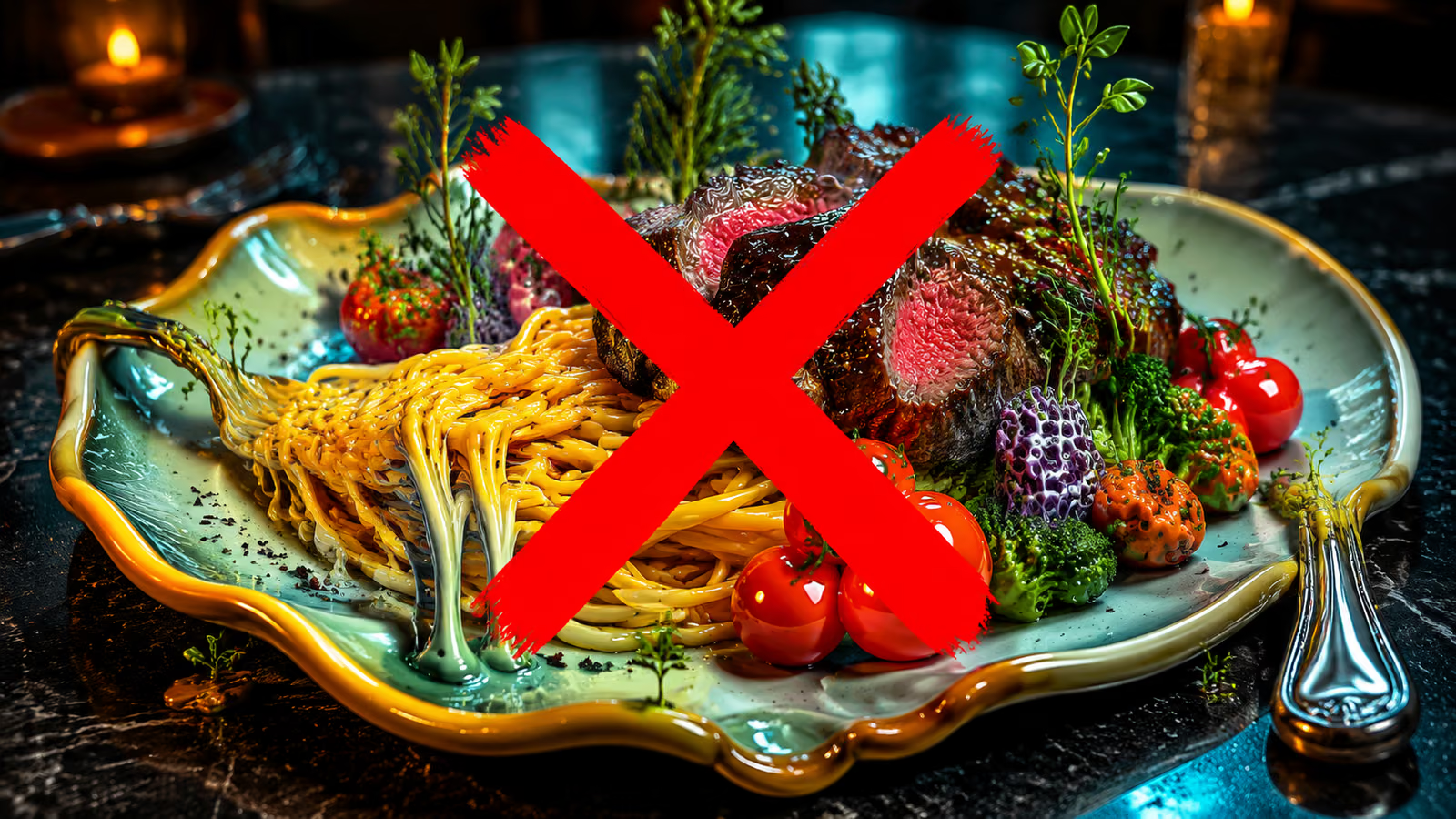
There's a moment before almost every order when the customer hasn't tasted anything yet. No smell, no service, nothing real to judge the place by. All they have is an image.
It might sit on a menu, a website, Instagram, Google or a delivery app, and it holds attention for two seconds. In those two seconds it makes a promise. This is the portion. This is the texture. This is the care behind it. This is what arrives if you choose us.
AI has made that promise very easy to fake. Write a description, wait a few seconds, and a perfect plate appears. The sauce catches the light exactly where it should. The garnish falls into place. Nothing has gone cold, nothing has collapsed and nobody has spent a morning moving lights around a table.
There's only one problem.
The dish never existed.
A model can generate the idea of a burger, the average of every beautiful burger it has learned from. What it can't do is photograph yours: it has never stood in your kitchen, never seen your bread, never measured your portion, never watched your chef set the plate down. The picture might be impressive. It still isn't evidence.
I am not against AI
Refusing to invent a dish doesn't mean refusing the technology. I use AI in retouching, because modern tools solve real problems fast and give me back time for the part of the job that actually needs judgement.
They help me remove a distracting cable from a shot, clean a small mark off a table, extend a background for a different crop, fix a technical distraction that has nothing to do with the food I'm selling. That isn't the same as replacing the plate.
Professional food photography has never meant pointing a camera at something and refusing to touch the file afterwards. The chef plates with care. I choose the light on purpose. I might remove a fingerprint from a glass. I refine colour and contrast so the photograph says what my eye saw in the room. All of that work exists to present the real dish at its best.
Retouching asks: how clearly can I show what was there? Generation asks: what can I put there instead?
Those aren't two versions of the same decision. One improves the truth. The other can replace it.
My line is simple. I'll use AI to support a photograph that started with real food on a real plate, not to invent the food, change the portion, add ingredients, redesign the plating or build a menu image for a dish the kitchen has never made. The technology was never the problem. The promise is.
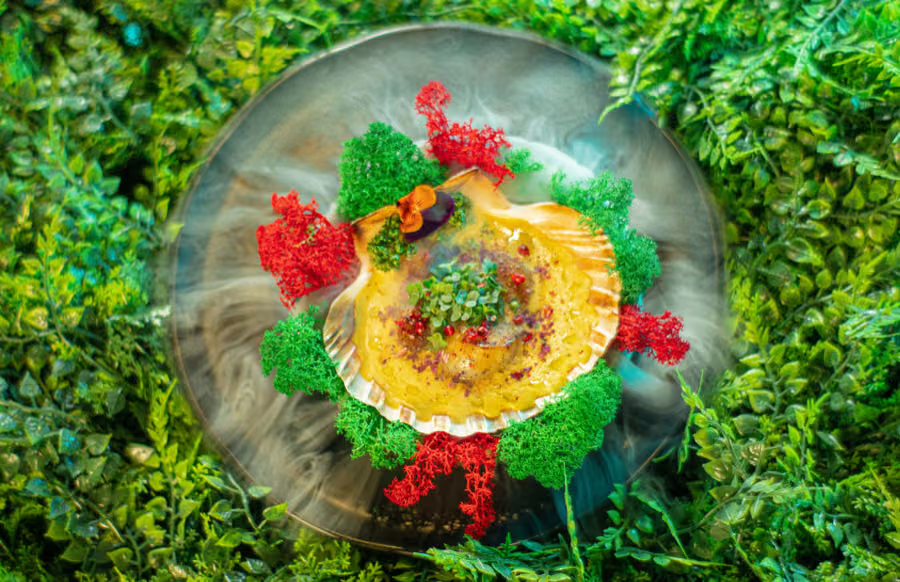
A beautiful image can still damage the sale
The case for AI food photography usually starts with convenience: quicker, cheaper, none of the disruption of a shoot. It can produce twenty dishes before a real photographer finishes setting the first light. All of that can be true on the day the image gets made. The real cost shows up later.
If the generated photo shows a bigger portion, a different texture or a more elaborate plate than the kitchen actually sends out, expectation and reality drift apart. The customer probably won't complain about artificial intelligence. They'll just say the dish wasn't what they expected, trust the next photo a little less, leave a cooler review, or pick somewhere else next time.
Revenue is not always lost in a dramatic moment. Sometimes it leaves one decision at a time.
One customer doesn't finish the order. Another comes once and doesn't come back. Somebody scrolls a menu full of polished, interchangeable images and quietly decides the restaurant has less personality than it has. The saving happened once. The doubt can repeat every time the image gets seen.
You don't have to take a photographer's word for it. Google's own photo guidelines tell businesses that profile photographs should show no significant alterations and no excessive use of AI and, in their own words, should represent reality. And I keep seeing the same pattern in the wild: when a venue swaps real dishes for generated ones, the regulars notice, and what they feel is closer to distrust than appetite.
Nobody needs to identify exactly what's wrong with an image to trust it a little less. People are very good at sensing when something feels too smooth, too generic, too disconnected from the place selling it. Food has fingerprints. Brands should too.
AI tends to remove the thing that makes the restaurant worth choosing
The value of a restaurant is rarely the abstract idea of a dish. It's this chef's version of it. The edge of the pastry. The exact colour of that sauce. The particular glass. The imperfect char off the grill. The way a table catches the light at four in the afternoon. None of that is a mistake to be smoothed away. That's the identity.
Generative AI is very good at producing what food is expected to look like, which is exactly why so much of it starts to look the same. The same shine, the same shallow depth of field, the same impossible steam, the same garnish placed by nobody in particular.


A restaurant doesn't need to look like every other successful restaurant. It needs to look unmistakably like itself. In years photographing kitchens across Edinburgh, from The Dome to West End Brasserie to Tantra, I keep relearning that two plates from two different kitchens should never look interchangeable, even when they share a name on the menu.
Real photography records more than the food on the plate. It records the decisions behind it: the crockery the owner chose, the portion the kitchen decided on, the texture achieved that day, the room the customer will actually eat in. Take those things out and the image can become more perfect while the brand becomes less specific.
A recognisable image persuades more than a perfect one.
If you can't afford a photographer yet, use your phone
Not every new restaurant has the budget for professional food photography on day one, and I understand that. Opening a venue eats money before the first customer walks in, and photography sometimes has to wait its turn.
But if the choice is between an honest phone photo and an invented AI image, take the phone photo. Clean the lens, move the plate towards a window, turn off the ugly overhead light fighting the daylight, keep the background simple, plate the dish with care and photograph the portion exactly as it leaves the kitchen. Learn the basics properly: they will take you further than pretending the basics no longer matter.
The result won't have the depth, control or finish of a professional shoot. It will have something more important than synthetic perfection: the dish exists.
An honest phone photo gives the customer real information, gives a future photographer a real starting point, teaches the restaurant which angles, which dishes, which moments people respond to, and it can be replaced later once the budget allows. A fictional dish cannot be made honest in post-production.
Choosing AI because it's easy can feel like saving money, but easy and inexpensive aren't always the same thing. If the image makes a restaurant look generic, sets an expectation the kitchen can't meet, or weakens confidence at the moment someone is deciding what to order, the fee you saved on photography can come back later as revenue that never arrived.
The easiest decision often sends its invoice later.
The photograph is part of the hospitality
A restaurant asks for trust before the customer even arrives. Trust that the room will feel right. Trust that the booking will actually be there. Trust that the dish is worth what it costs. Photography is part of that relationship, whether anyone thinks of it that way or not.
The goal was never to make ordinary food look extraordinary by replacing it with something imaginary. The goal is to understand what's already special about a kitchen, then use light, composition, timing and careful retouching to make that visible to someone who hasn't tasted it yet.
That's why I'll use AI to improve a real photograph, and why I won't use it to generate a food image for a dish that doesn't exist. One is a tool inside the process. The other changes what's actually being advertised.
The future isn't a contest between photographers and artificial intelligence. It's a choice between images that document a real product and images that manufacture one. For a restaurant, that choice reaches further than how the picture looks: trust, identity, and the reason somebody orders from you instead of the place next door.
HOSPITALITY PHOTOGRAPHER IN EDINBURGH →
If you're not ready for professional photography yet, start honestly, with the phone in your hand. When you're ready to build a stronger visual identity, invest in restaurant and food photography that begins with what your kitchen actually makes.
The food should exist first. Then we make people want it.
Want photos of the dishes your kitchen actually serves?