6 AUGUST 2026
By Gorka Di Capitan
The Fringe Just Started. So Did Christmas.
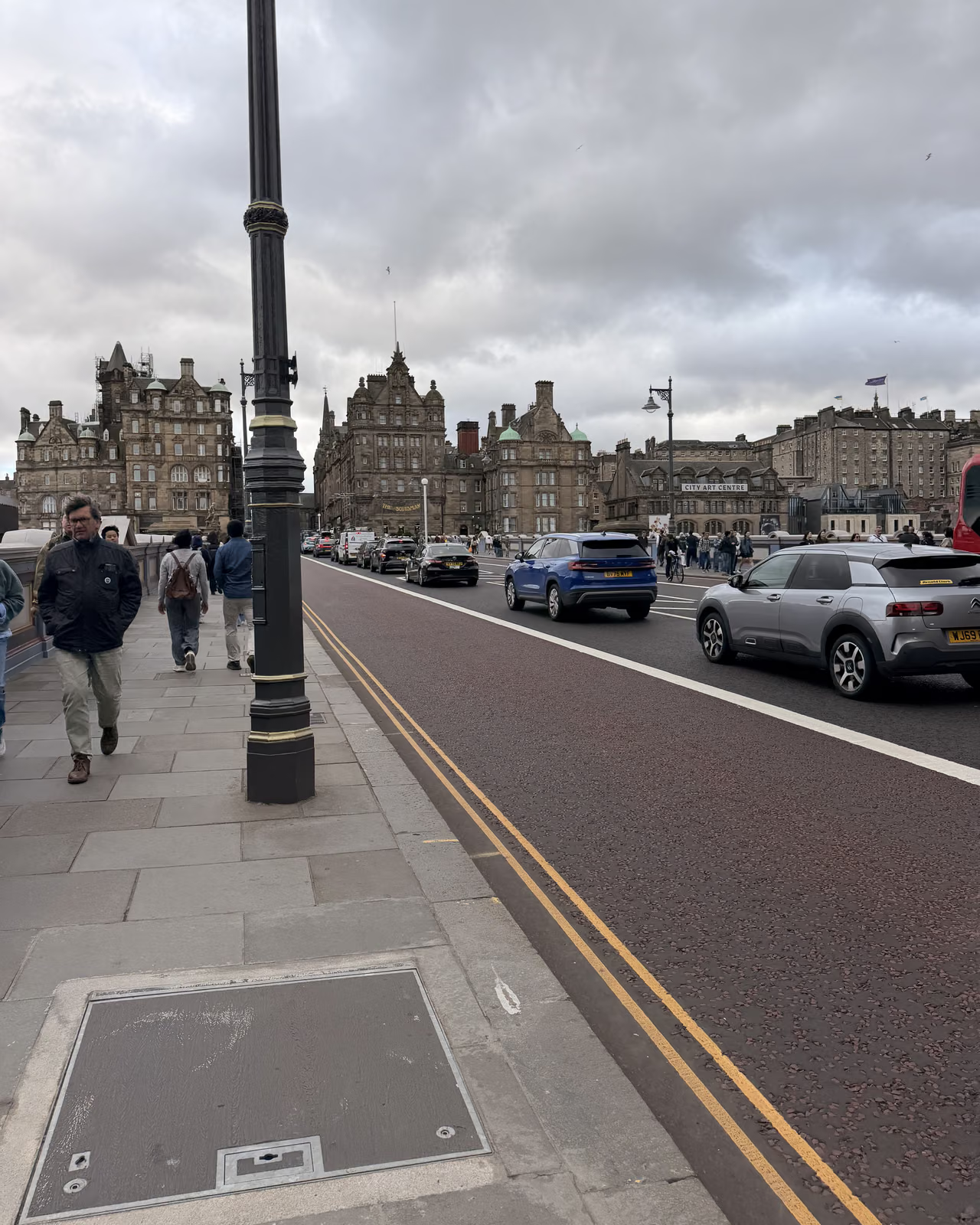
The Fringe has just taken over Edinburgh. For the next month, a city of half a million people will run at the pace of a capital several times its size: every venue becomes a stage, every street becomes a queue, and the queue outside a pub can look like the queue for a show.
I photograph and film hospitality here all year round, and August is the month when everything my clients worry about the rest of the year seems to solve itself. Tables are full without asking. The tills are loud. Nobody needs a campaign to fill a Tuesday.
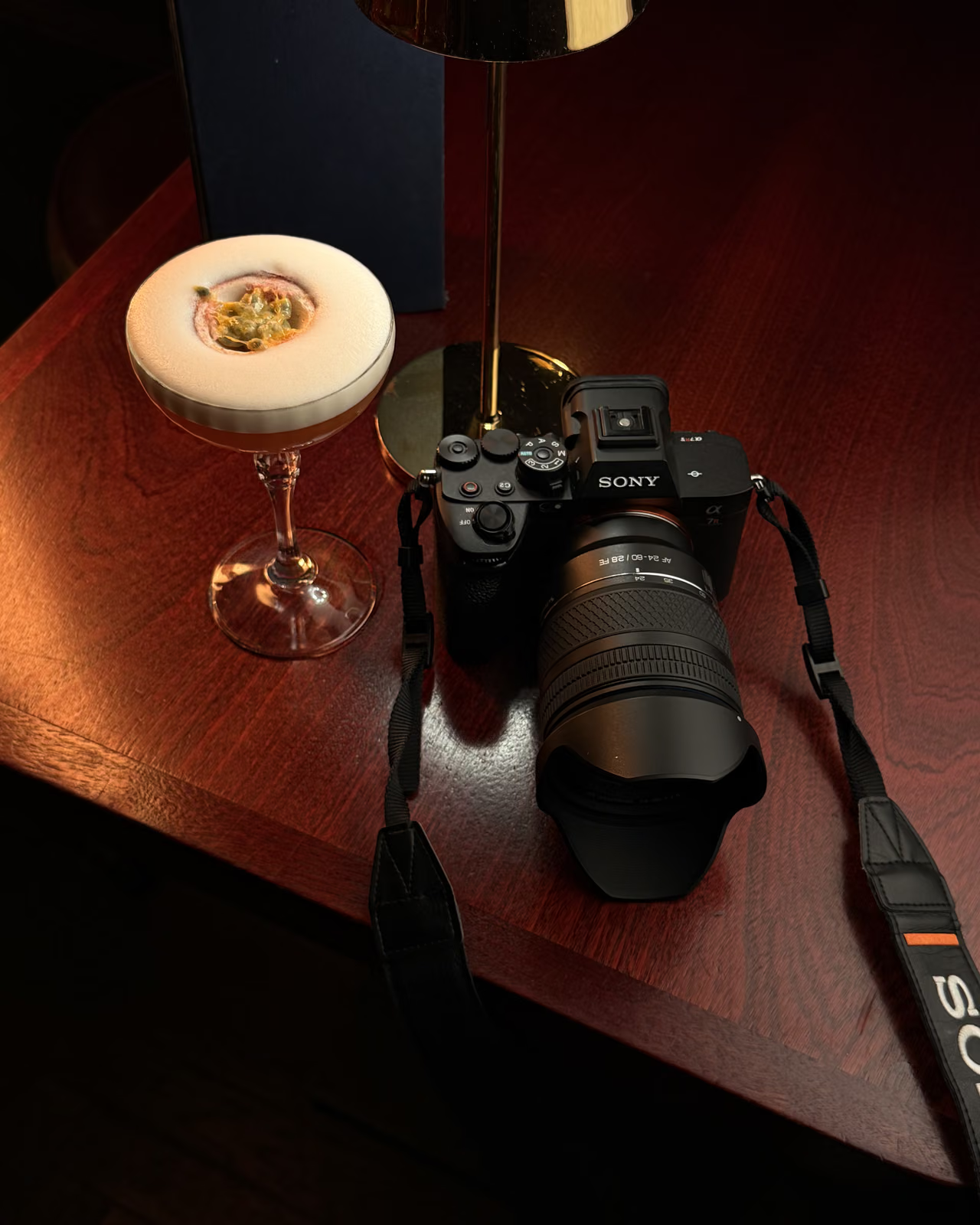
It is also the month when almost every venue makes the same quiet mistake.
They treat August as the season, instead of what it really is: the month that pays for the chance to win the seasons that follow.
What the Fringe actually does to a venue
From inside a kitchen, the world's biggest arts festival looks less like culture and more like endurance. Menus get shortened because volume beats variety. Teams run doubles and stop having opinions about anything after ten at night. The building is full of people who have never been there before and may never come back.
That last part matters more than it seems. The Fringe crowd is not your crowd. Most of them fly home in September. The regulars who keep a venue alive from October to March often spend August avoiding the centre entirely.
So a full August tells you very little about your business. It tells you the city was full. The question that decides your winter is different: what did you do in August that someone will remember in November?
September is the trap
When the festival ends, Edinburgh exhales. The posters come down, the flats empty, and venues that ran at double speed for a month finally slow down. The temptation is to rest, recover and get back to normal.
But September is not normal. It is the quietest cliff edge in the calendar. The tourists leave faster than the locals return, bookings dip, and a team that spent August surviving now stands in a half-empty room with no plan, because nobody had time to make one.
The venues that struggle in autumn are rarely the ones that had a bad August. They are the ones that let August use up all their thinking.
Christmas starts in September, while the city is still warm
Here is the counterintuitive part, and after years photographing Edinburgh hospitality it is the clearest pattern I know: the Christmas season is won in September.
Christmas menus go on sale in October. Office party bookings are decided by people who plan early and book the venue that looked ready first. If your festive photography happens in late November, you are advertising a product that is already half sold, with images produced in a rush, in a kitchen that no longer has a quiet morning to give you.
Shoot it in September instead and everything changes. The kitchen has time to plate the festive menu properly. The room can be dressed for an afternoon and photographed calmly. The team is rested enough to look like people you would want to spend an evening with. And when the first cold week arrives and everyone suddenly searches for a Christmas venue, you are already there, looking finished.
READ: THREE YEARS OF NYE AT THE DOME →
I have documented New Year's Eve at The Dome for three years running, and those nights are sold months before the lights go up. The venues that fill their December did not start communicating in December. They started while the terraces were still open.
What a September session should give you
Not just pretty pictures: ammunition for a whole quarter. The festive menu shot before it goes on sale. The room dressed and photographed while there is time to do it properly. Content for the moment bookings open, content for the quiet weeks of November, content for the final push when December arrives.
Video matters here too. A short film of the room turning festive does more for an office-party decision than any list of prices, because the person booking is not buying food. They are buying the night they can already see.
And if the summer taught you anything about your venue, September is when you turn it into material: the dishes people photographed most, the corner everyone chose for their pictures, the things strangers loved that your regulars have stopped noticing.
The calendar is the strategy
None of this is really about the Fringe. It is about the shape of a year. Every city has a month that fills every room without asking, and every city has the months that only reward the venues that prepared for them.
August fills the room. What you do in September decides who fills it in December. That rhythm repeats every year, whether anyone plans for it or not, and the venues that grow are simply the ones that stopped being surprised by it.
So enjoy the festival. Survive it. Take the loud tills and the full tables. But when the last flyer is swept off the Royal Mile, do not go to sleep. That is the moment the winter is decided.
HOSPITALITY PHOTOGRAPHER IN EDINBURGH →
The Fringe ends. The calendar doesn't. The venues that win December are already working, quietly, in the warm light of September.
Thinking about a project of your own?