
12 OCTOBER 2026
By Gorka Di Capitan
Why a Psychologist Needs to Invest in Their Personal Brand
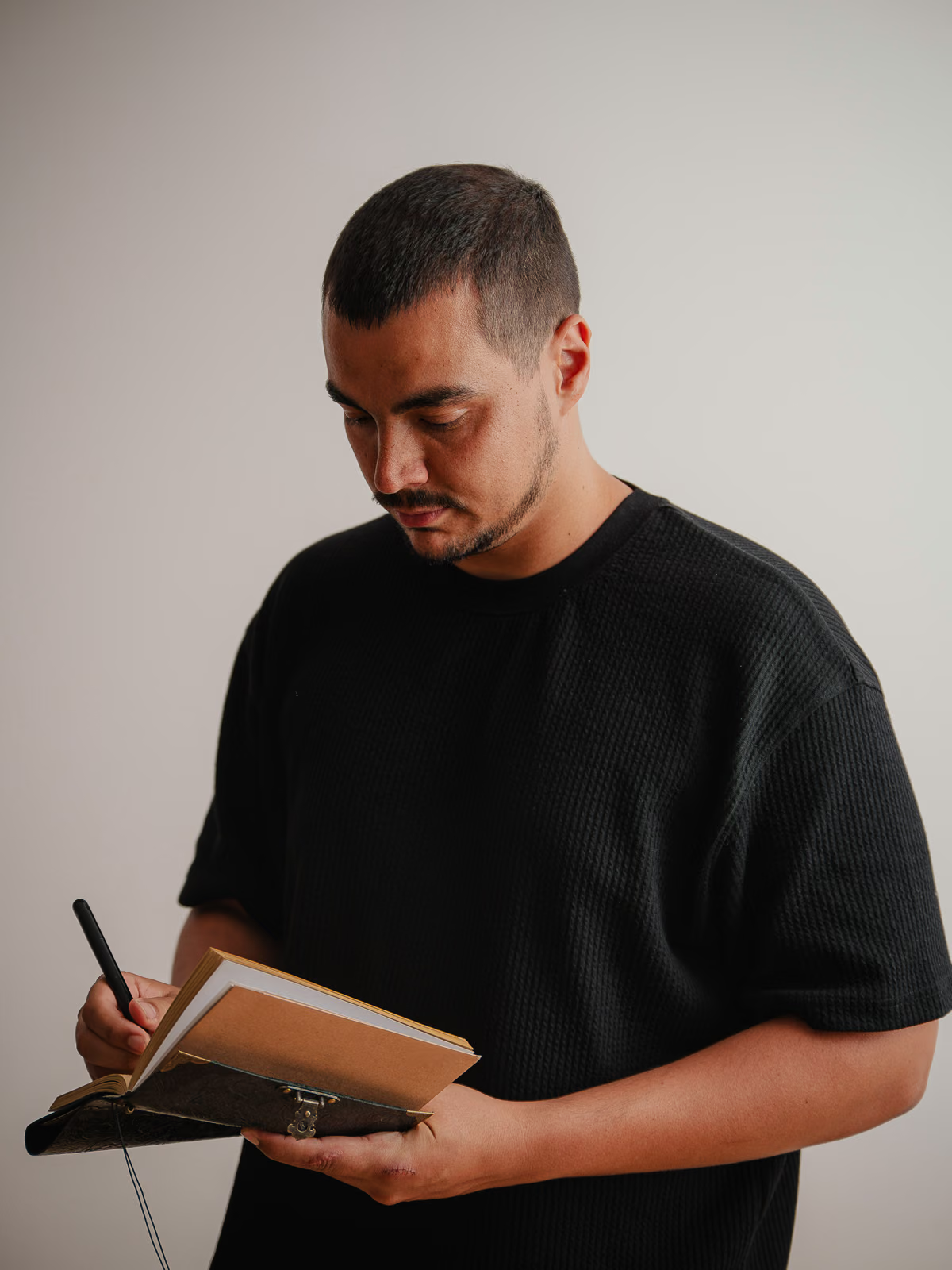
Joaquín González booked a portrait session. He is a chartered sport psychologist who works with esports teams like Movistar Riders and KOI, and he is also my cousin, so the brief was one line long: decent photos for the website and the profiles. Today the photos are the smallest part of what he has. His site runs on them, yes, but it also tells his real cases, publishes his prices and comes with a panel where he edits every text, photo and article himself.
I want to explain how a two-hour session turned into all of that, because personal branding for psychologists sounds like a contradiction until you see one who has it, and the reasons apply to almost any professional whose name is the business.

Personal branding has a reputation problem
Say "personal brand" to a psychologist and many of them picture a trainer on Instagram. I get it. But a chartered psychologist competing for attention in modern sport, esports included, needs what any brand needs: proof that the work is real and a website that answers what people type into Google at eleven at night.
In sport psychology there is no beaten path to copy yet. That is a nuisance and an advantage at the same time.
What does a psychologist's website need?
The list, in the order it mattered for Joaquín.
Real cases. His site tells seven of them, with the clubs named and the individual athletes anonymised. One is about frustration outbursts in esports, and the photo for it is a still life of a smashed PS5 and two destroyed controllers. That image says more about his job than three paragraphs of method.
Published prices. Psychologists tend to hide them. He doesn't, and it saves a first email about money.
A way to book that lands in his own inbox, with nothing in between. He answers from there.
And the photography came first. It set the art direction and everything else was built around it. Design first, with a headshot squeezed into a corner afterwards, is how most professional sites end up looking like every other one.

What the numbers say so far
The site went live with a full migration from his old domain. Its SEO health score went from 61 to 91, and impressions in Google grew 240% in under a week.

I want to be careful with that. These are early numbers from a young site. Impressions are people seeing the site in a search, not people booking a session, and the second number is the only one that pays the rent. Business results take months, and I will update his case when they arrive. What the early data does show is that Google can read the site and is putting it in front of more people than the old one ever reached.
Why he edits it himself
The panel was written from scratch for the way he works and for nothing else. He rewrites a text, swaps a photo, updates a price or writes a blog post, and an article finished today can be left scheduled to publish itself next Tuesday while he is in a session. No plugins, no monthly fee, no waiting for me to have a free afternoon.
I could have kept that control and charged him every time he wanted a comma moved. Worse deal for him, worse site: a site that depends on someone else's free afternoon stops being updated within a year.
The part that applies to you
If you are a psychologist, a coach or a consultant, your name is already the product. Investing in it means photographs that set the tone and a site that tells your real work. A session of personal brand photography is where this one started. Joaquín's full case, with the numbers as they come in, is on his project page, and if you want to talk about yours, write to me.
Thinking about a project of your own?