1 SEPTEMBER 2026
By Gorka Di Capitan
Ten Years Watching Edinburgh Compete for Attention
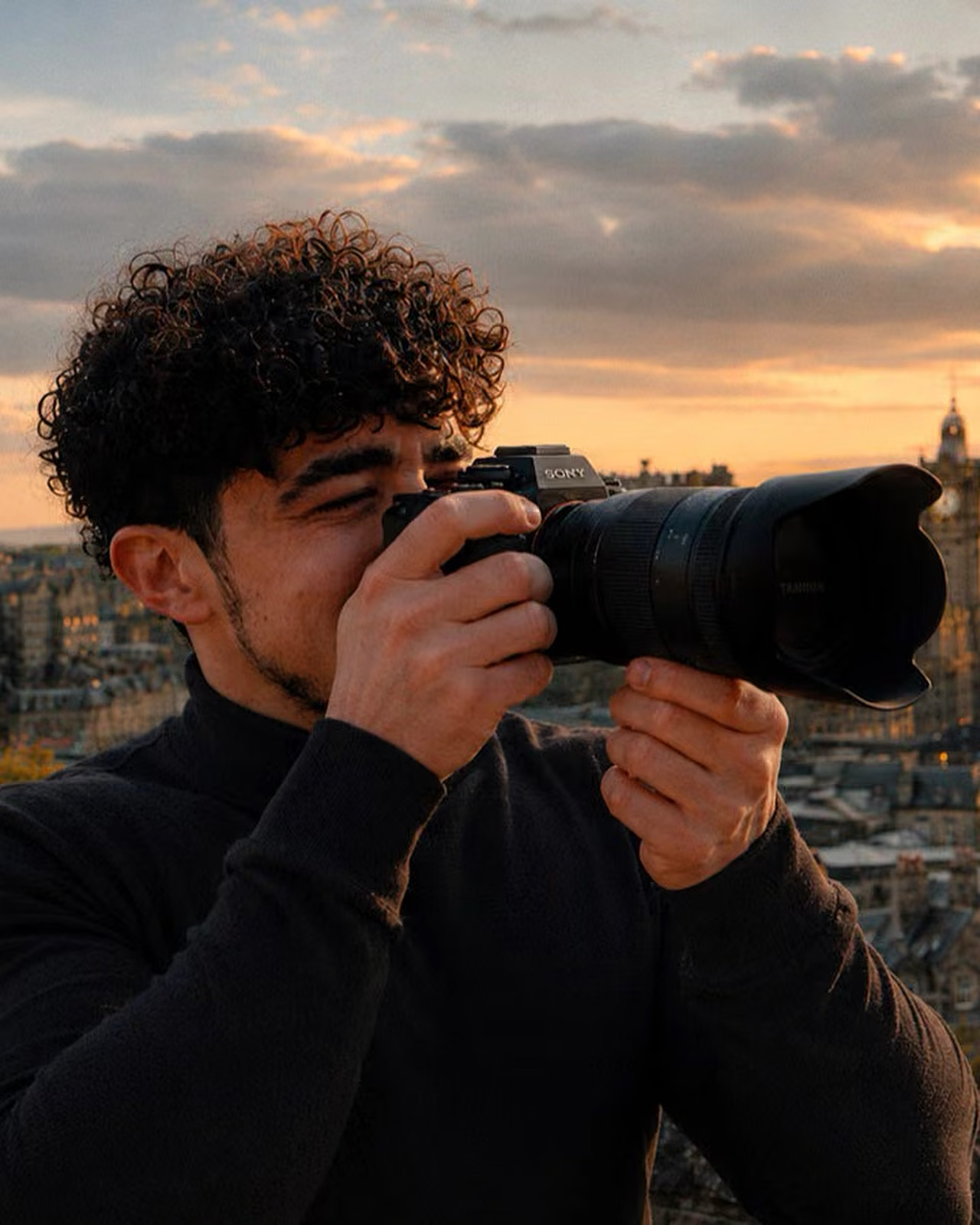
Edinburgh has always known how to be looked at. The light changes by the minute, a narrow close opens onto the castle, stone turns gold for half an hour and fades back into grey. People who have lived here for years still stop to photograph it.
What changed is not the city. It is how its businesses need to be seen. Someone can stand outside a bar on George Street now and compare it with a place in Glasgow, London or Copenhagen before ever touching the door. A visitor in New York can decide where to eat, drink and stay in Edinburgh months before landing. The venue next door is still part of the competition. It is no longer the whole map.
A bigger city means a louder screen
This is not the Edinburgh I started photographing in. Its population grew 9.4% between 2014 and 2024, from 485,270 to 530,680, according to the City of Edinburgh Council's Edinburgh by Numbers 2025 report. That is a lot more people living here, eating here and opening businesses here, all reaching for the same evenings out.
Then there are the people who do not live here at all. In 2024 Edinburgh recorded 5.05 million overnight visits, 17.79 million nights and 2.565 billion pounds in visitor spending. VisitScotland's regional research counts 2,130 tourism businesses in the city in 2025, 11.6% of all Edinburgh businesses, supporting around 40,000 jobs.
Read those numbers slowly and they describe opportunity and competition in the same breath. Every visitor arrives with a limited number of meals to book and evenings to spend, and every one of those 2,130 businesses is reaching for the same night. A good venue can be full one week and quiet the next. A restaurant with real history can look invisible next to a newer place that simply communicates better. Quality still matters, but quality nobody notices cannot influence a decision, which is exactly why visual content for Edinburgh businesses has stopped being a nice extra and started being competitive.
I have watched this shift happen before
I have spent more than ten years working as a commercial photographer in Edinburgh: restaurants mid-service, hotels, pubs, cocktail bars, events. When I started, a shoot was something a venue did once and left on the website for years. A menu shoot was for the menu, full stop. A refurbishment got one set of photographs and that was that.
That is not how it works anymore. The same images now have to carry the website, Google, booking platforms, delivery apps, press and social media, often at the same time. The question changed from whether a venue needed photography to what the content actually needed to achieve: fill quieter tables, launch a menu, sell rooms off season, refresh a brand that has gone quiet.
Working inside real service teaches you things a studio never will. A kitchen mid-service does not stop for a photograph. You learn to read a room fast, ask for one more plate at the right moment and stay completely out of the way at the wrong one. That instinct matters more than any piece of equipment I own.
Reputation only speaks to people who already know you
Edinburgh is full of businesses with real history, and that history has value that cannot be manufactured. But reputation has a natural limit: it speaks loudest to people who have already heard the name. The next customer might be planning a trip from another country, a student who arrived last week, or a couple comparing three venues on their phone with no memory of any of them.
They cannot assume the real experience is better than the online one. They judge the evidence in front of them. A less distinctive business that communicates clearly will reach the shortlist before a better one that communicates poorly. Reputation carries yesterday's customer. Visibility is what introduces tomorrow's.
Posting more is not the same as being seen
The obvious answer to a crowded market is to publish constantly: more reels, more photographs, more stories. I do not think that is the answer. I have seen businesses post every single day and still be hard to remember, because none of it agrees with itself: dark and moody one week, bright and casual the next, with nothing tying it together.
Recognition grows when the pieces agree with each other: the same light, the same pace, the same honesty about what the place actually feels like. A restaurant does not need every plate from every angle, it needs the right customer to picture the meal. A hotel does not sell a bed by photographing four walls, it sells arriving, staying and waking up there.
A business does not need to win the internet for one day. It needs to be recognisable enough to be chosen.
Visual content for Edinburgh businesses has to stay real
As the competition for attention grows, it is tempting to make everything look bigger, cleaner and more finished than it actually is. I would rather turn down a job than build a version of a business that does not exist. The food has to exist. The room has to feel like the room people walk into on a Tuesday, not just the one built for a launch night.
That is why understanding how a venue actually runs matters as much as lighting it well: a kitchen in service, a floor team working around guests, the brief window when a dish or a room looks its absolute best. The strongest content does not sit on top of a business like decoration. It comes out of the business itself, which is exactly why the trust holds once the customer walks in.
What ten years in Edinburgh taught me
Good work starts before the camera comes out: understanding what a business actually needs to change, knowing when to direct and when to stay out of the kitchen's way, planning enough that one session can supply a website, a campaign and months of posts instead of one disconnected shoot that gets used twice and forgotten.
My job is not to make Edinburgh look attractive. The city does that entirely on its own. It is to find what makes one business different inside a city that pulls in millions of eyes, and turn it into photography and video people actually remember: the warmth of a dining room mid-service, the scale of a hotel, the detail behind a product, the character of a team that makes the place worth returning to.
COMMERCIAL PHOTOGRAPHER IN EDINBURGH →
If your business needs a visual presence that reflects the quality behind it, I work as a commercial photographer in Edinburgh, shooting photography and video for hospitality and independent brands. The content I build starts with what it needs to do, not with a template. The customer may eventually walk through the door. But the first visit usually happens on a screen.
SEE THE BEIRUT RESTAURANT CASE →
Want your venue on those screens?